


Thatch Fire Ratings Explained: What Commercial Buyers Must Know

Thatch has a reputation, and it is not an unfair one. Dried, organic thatch burns. That history is exactly why fire rating is the first question a commercial plan reviewer, an HOA board or an insurance underwriter asks about a thatch roof, and why the answer has to be a document rather than a reassurance.
What ASTM E108 Actually Tests
ASTM E108 is the standard fire test for roof coverings. It evaluates a roof assembly against spread of flame across the surface, a burning brand placed on the roof, and intermittent flame exposure, then sorts the result into three classes.
Class A. The highest rating. Effective against severe fire exposure.
Class B. Effective against moderate fire exposure.
Class C. Effective against light fire exposure.
The equivalent test most people have also heard of is UL 790, which is functionally the same test under a different label. If a submittal references one or the other, you are looking at the same thing.
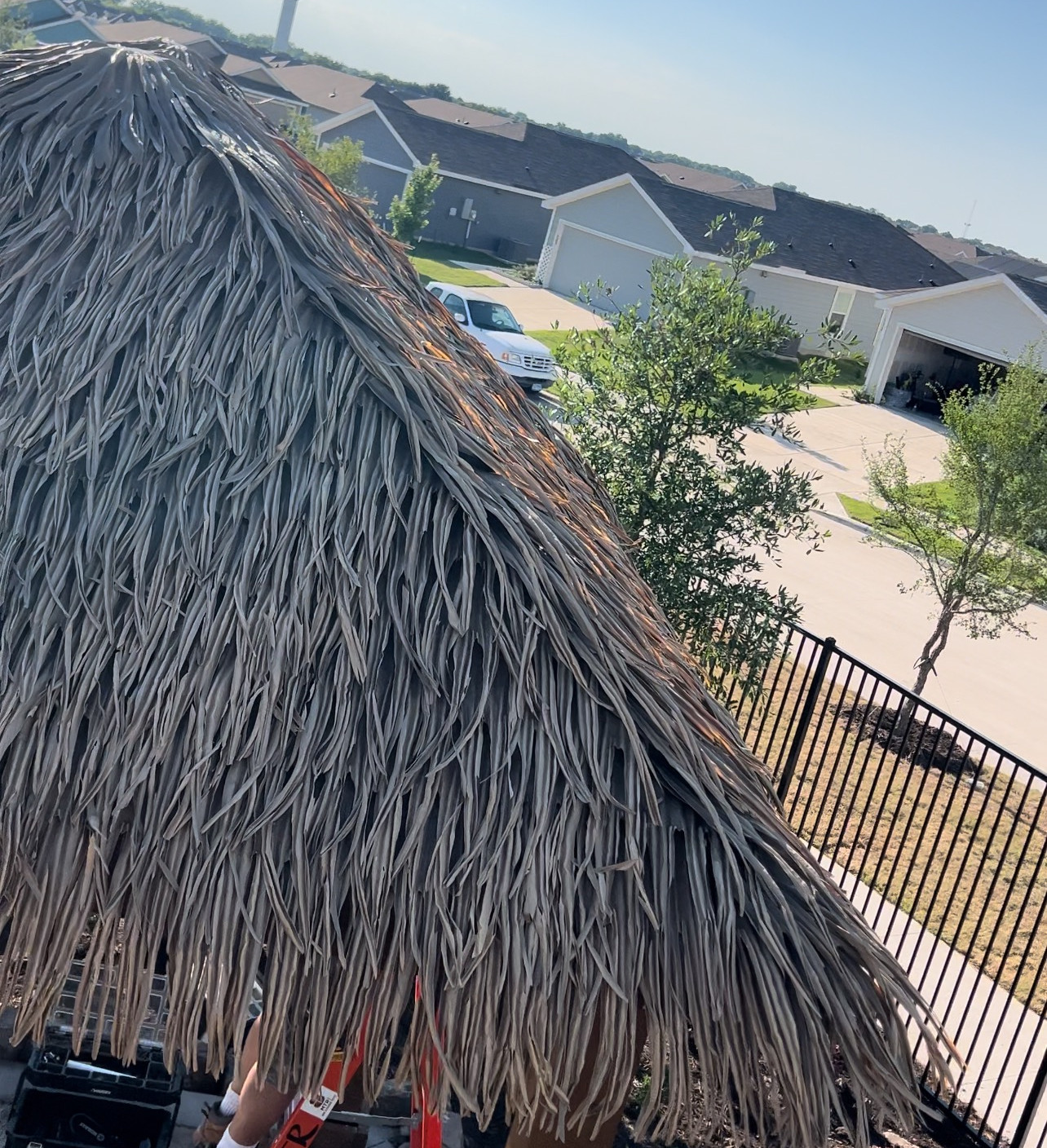
The Distinction That Trips People Up: Material Versus Assembly
A rating belongs to a tested assembly, not to a bag of material. The class describes the covering as tested over a specified deck and underlayment, installed in a specified way. Take the same panels, put them over a different deck, change the underlayment or the fastening, and you no longer have the assembly that was tested. When you request documentation, request it for the assembly you are actually building.
When A Fire-Rated Specification Is Required
Commercial occupancies, essentially always: restaurants, bars, hotels, resorts, waterparks and amenity centers.
Structures within a defined separation distance from a building or a property line.
Anything attached to a permanent structure rather than freestanding.
Jurisdictions with wildland-urban interface provisions.
Many HOA and master-planned community architectural standards, independent of the building code.
Whenever the insurance carrier says so, which in practice is often before the code does.
The authority having jurisdiction is the final word, and requirements vary. The practical rule for commercial work: assume fire-rated is required and be pleasantly surprised, rather than the reverse at plan review.
What to Demand From Any Supplier
The written product specification, including polymer type and UV stabilization.
The fire test report or listing for the assembly, with the class stated.
Wind load certification appropriate to the project location.
Dimensioned drawings suitable for submittal.
The warranty document, in full, before purchase rather than after.
A supplier who cannot produce those on request is not a supplier for a commercial project. Verbal assurance has no standing with a plan reviewer and none at all with an underwriter after an incident.
Get It Right At Design
Fire specification is a design decision, not a purchasing decision. Changing it after the structure is engineered can change the deck, the underlayment and the fastening schedule. Decide it in the first conversation and the rest of the submittal is straightforward.
Fire-Rated Thatch for Texas Commercial Projects
For commercial buyers in Texas the review comes from your local authority having jurisdiction, and in North DFW that means separate building departments in Frisco, Plano, McKinney and Prosper, each with its own reviewer. Restaurant patios along the Dallas North Tollway and amenity centers in master-planned communities are the two places we see rated assemblies requested most.
Frequently Asked Questions
What rating do commercial buyers need?
Most commercial paths require a Class A rated roof covering. Ask for the ASTM E108 report by name and confirm it covers the assembly you are buying.
Is natural thatch ever code-compliant commercially?
Rarely without heavy treatment that has to be reapplied. That maintenance obligation is what pushes most operators to synthetic.
Will my insurer ask for documentation?
Frequently before the code official does. Get the test report and warranty into the project file early.
Keep Reading
Learn more about commercial and restaurant thatching
Learn more about resort developer thatching
Learn more about request pricing
About My Thatch Roof
My Thatch Roof manufactures and installs synthetic thatch from Frisco, Texas, serving North DFW including Frisco, Little Elm, Prosper, Celina, Aubrey, The Colony, Plano and McKinney, and shipping worldwide to resorts, waterparks and homeowners. Twenty-year material warranty. Call (972) 432-7011 or request pricing.
Still Have Questions?
Our Commercial & Resorts section covers test reports, insurer requirements and specifying at design stage. It is the same information we give buyers on the phone, written down so you can read it at 11pm without waiting for a callback.
Browse the full My Thatch Roof FAQ, or skip ahead and tell us about your project.


Comments